BugLifeCycle
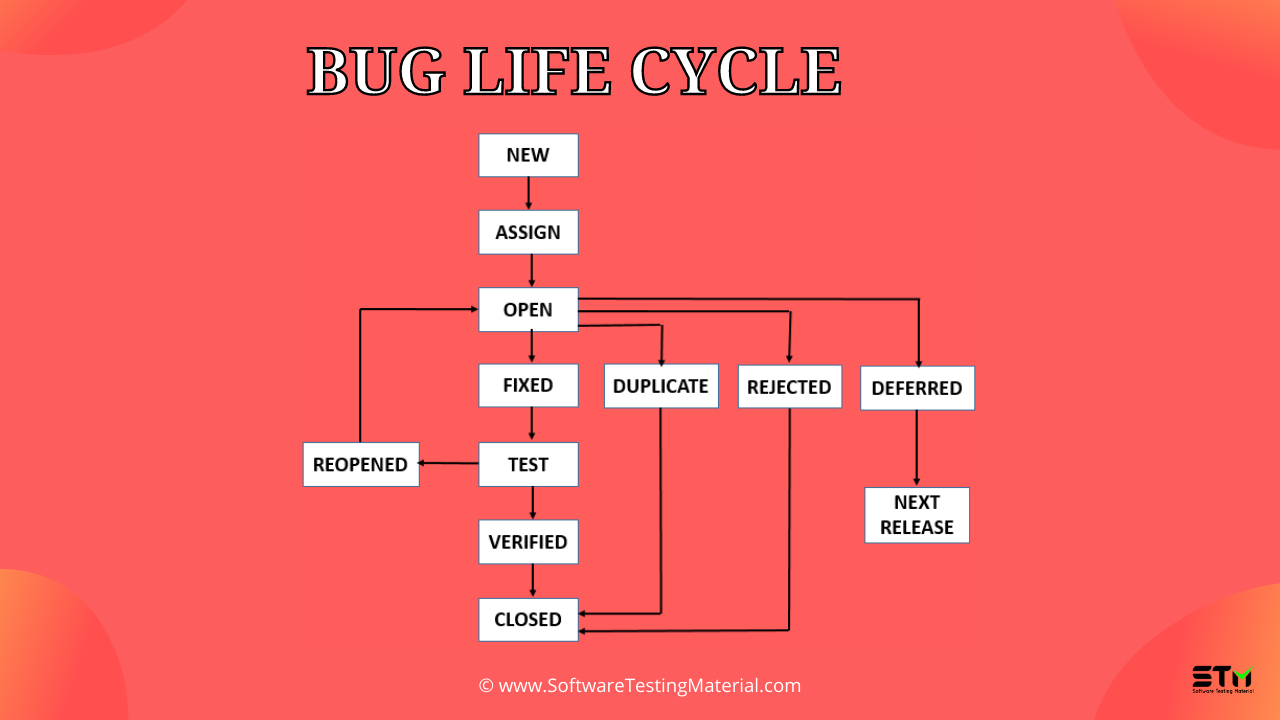
The Bug Life Cycle, also known as the Defect Life Cycle, describes the stages that a software bug or defect goes through from its identification to its resolution. While specific steps may vary depending on the organization and its processes, the typical bug life cycle includes the following stages:
- New: The bug is reported for the first time by a tester, user, or other stakeholder. It is logged into the bug tracking system with details such as a description of the issue, steps to reproduce it, severity, and priority.
- Assigned: The bug is assigned to a developer or development team responsible for fixing it. This assignment may be based on factors such as the developer's expertise, workload, or the nature of the bug.
- Open: The developer begins investigating the bug to understand its cause and potential solution. This may involve reproducing the issue, analyzing code, and identifying the root cause.
- In Progress: The developer actively works on fixing the bug, implementing changes to the codebase to resolve the issue. Depending on the complexity of the bug, this stage may take varying amounts of time.
- Fixed: Once the developer believes they have resolved the bug, they mark it as "Fixed" and provide details of the fix, such as the code changes made and any relevant information.
- Verified: The fixed bug is then passed back to the testing team or individual responsible for verification. They retest the software to confirm that the bug has indeed been fixed and that no new issues have been introduced.
- Closed: After the bug has been verified as fixed, it is marked as "Closed" in the bug tracking system. At this point, it is considered resolved, and no further action is required. The bug may be closed with a resolution note summarizing the fix.
- Reopened: In some cases, a bug may be reopened if it reappears in the software after being closed, or if the fix did not fully address the issue. It then goes back to the "Open" or "In Progress" stage for further investigation and resolution.
By following the bug life cycle, organizations can effectively track and manage software defects, ensuring that they are addressed in a timely manner and that software quality is maintained throughout the development process.
Comments
Post a Comment